Bulk Wooden Embroidery Hoops: The Complete Buyer’s Guide
Bulk wooden embroidery hoops are one of the most practical purchases a craft teacher, studio owner, or artisan can make. Yet, they are one of the easiest to get wrong if you order without knowing what separates a quality hoop from a frustrating one. The wood type, ring fit, screw hardware, and surface finish all affect how the hoop performs under tension.
This guide covers everything: anatomy, wood comparisons, size selection, creative uses, smocking-specific application, and what to check before placing a wholesale order.
1. What Are Wooden Embroidery Hoops?
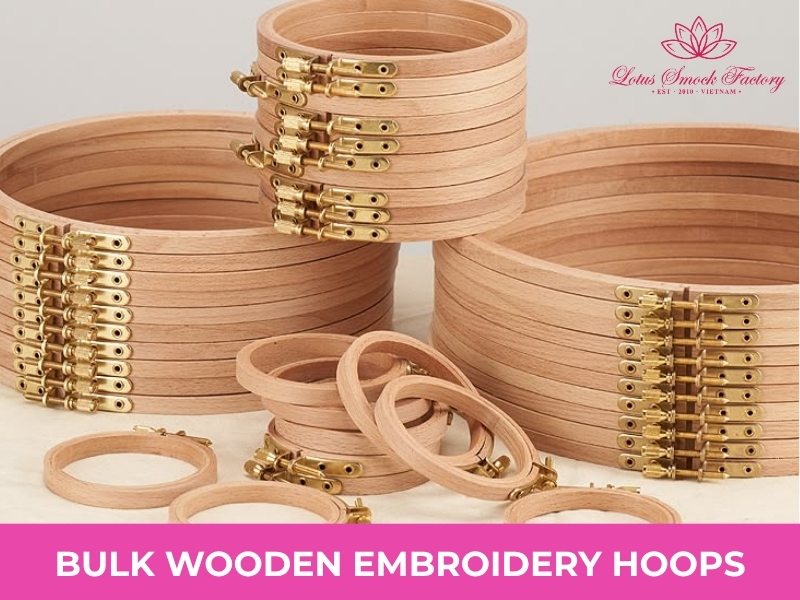
A wooden embroidery hoop is a two-part circular frame used to hold fabric taut during hand embroidery, smocking, cross-stitch, and needlework. It consists of three components working together:
- Inner ring: the solid wooden circle that sits directly against the fabric. It has no hardware, just a smooth, continuous surface that the fabric wraps around.
- Outer ring: the slightly larger ring that fits over the inner ring and fabric. It has a small gap at one point and a brass screw mechanism that tightens the outer ring to clamp the fabric securely between the two rings.
- Brass screw: the adjustable hardware that opens and closes the outer ring. Brass is the preferred metal because it resists rust, operates smoothly over thousands of uses, and does not leave marks on fabric.
2. Why Wooden Embroidery Hoop Outperforms Plastic and Bamboo For Smocking And Hand Embroidery?
Plastic hoops can bend when pulled tight, so the pressure around the hoop is not even. This can make the fabric slip or create uneven wrinkles. Wooden hoops stay firm and keep the fabric stretched evenly across the whole surface.
Smooth hardwood, especially beechwood, holds the fabric securely without catching threads or leaving marks. This is very important for smocking because the fabric is already pleated, and uneven pressure can ruin the pleats.
Wooden hoops can also be sanded, painted, or stained, so they are not only useful for stitching but also nice for display or decoration.
3. Why Buy Bulk Wooden Embroidery Hoops?
If you are finding suppliers to buy bulk wooden embroidery hoops for any purpose, considering making bulk orders for these clear benefits:
3.1. Cost Savings Through Tiered Pricing
Bulk purchasing unlocks per-unit pricing that is simply unavailable at retail. Typical tiered pricing structure for bulk wooden embroidery hoops:
| Order Quantity | Typical Unit Price (USD) | Saving vs Single Unit |
| 1-9 pieces | $2.50–$4.00 | 0 |
| 10-49 pieces | $1.80–$2.80 | ~25–30% |
| 50-99 pieces | $1.20–$1.80 | ~40–50% |
| 100-499 pieces | $0.80–$1.20 | ~55–65% |
| 500+ pieces | $0.50–$0.80 | ~70–80% |
For a classroom of 20 students running six workshops per year, the difference between retail and bulk wooden embroidery hoop pricing across 120 units represents significant savings that fund additional materials.
3.2. Who Should Buy in Bulk
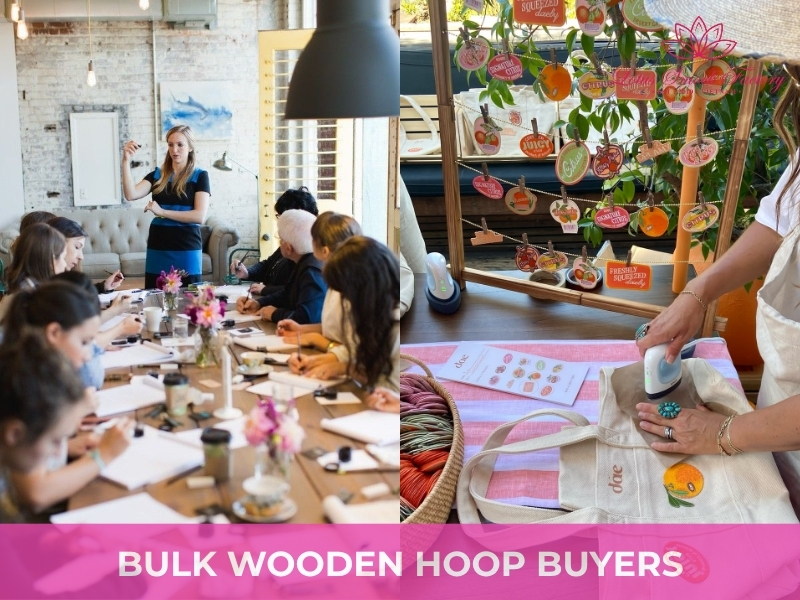
- Craft teachers and school programs: A set of 5–7 inch hoops in quantities of 20–50 suits most classroom projects.
- Craft studios and makerspaces: Studios running regular workshops need reliable stock. Running out mid-session because a supplier had limited inventory is a preventable problem that bulk purchasing solves.
- Etsy sellers and handmade businesses: Sellers framing finished embroidery or smocked pieces in hoops for sale need consistent sizing across their product range.
- Smocking artisans and teachers: Smocking requires specific hoop sizes for different panel widths. Artisans teaching smocking workshops need identical hoops for all students to ensure consistent tension results across the class.
Discover the art of smocking and secrets about smocking techniques of Lotus Smock
- Event planners and DIY décor businesses: Wedding décor, baby shower installations, and seasonal wreaths use hoops in volume. A single event can require 30-100 hoops of mixed sizes
4. Bulk Wooden Embroidery Hoop Sizes Guide: Which Size for Which Project?
Size selection is the most practical decision in hoop purchasing. First time buyers may find our summary helpful:
| Hoop Size | Best Projects | Notes |
| 3″-4″ | Mini ornaments, jewelry pieces, small monograms, gift tags | Tight working space: suited to fine thread and detailed motifs only |
| 5″-6″ | Beginner embroidery projects, smocking pleater samples, small floral motifs | Most popular size for hand embroidery classes and fits most beginner skill levels |
| 7″ | Intermediate projects, sampler pieces, medium smocking panels | Sweet spot between working space and portability |
| 8″-10″ | Larger smocking chest panels, wall art, gift display pieces | Standard size for finished smocked artwork framing |
| 12″-14″ | Quilting sections, large wall décor, classroom display pieces | Requires higher wood quality to maintain tension across larger diameter |
Most popular bulk order size: The most popular hoop sizes for bulk orders are 5-7 inches. These sizes are easy to use for many different projects and work well for both beginners and experienced crafters.
For smocking specifically: 8-10 inch hoops are more practical because they fit finished smocked pieces nicely for display. They are large enough to show designs like bishop dress panels or smocked cushion covers without cutting off the pattern.
5. Beechwood vs Bamboo vs Basswood: An Honest Comparison for Bulk Embroidery Hoop Buyers
This is the comparison most buyers need and few suppliers explain clearly. Each material has genuine strengths. The right choice depends on your use case and budget.
| Property | Beechwood | Bamboo | Basswood / Birchwood |
| Surface finish | Very smooth, consistent grain | Variable: can have fine splinters | Smooth, slightly softer than beech |
| Tension holding | Excellent: rigid under sustained pressure | Fair: can lose tension over time | Good: holds well for most projects |
| Ring gap risk | Very low: dense wood resists warping | Moderate: gaps can develop at joins | Low |
| Weight | Medium: substantial feel | Light | Light–medium |
| Durability | High: lasts years with basic care | Medium: susceptible to humidity | Medium–high |
| Price per unit (bulk) | Highest | Lowest | Mid-range |
| Best for | Smocking, professional embroidery, display | Budget classroom use, single-use events | General crafting, beginner classes |
| Paintable / stainable | Yes: takes finish evenly | Yes: but surface variation affects finish | Yes: absorbs finish well |
Honest summary:
Beechwood is the best choice for professional use because it is strong, durable, and keeps fabric tension evenly for a long time. It is worth the higher price if the hoop will be used often or displayed.
Bamboo is a cheaper option that works well for simple crafts or one-time use, but it is not very reliable for smocking or projects that need even fabric tension.
Basswood and birchwood are in the middle range. They are a good choice for classrooms or general use when beechwood is too expensive but bamboo quality is too low.
6. Creative Uses for Bulk Wooden Embroidery Hoops Beyond Stitching
Wooden hoops are more versatile than most buyers realize. Here are eight uses that drive bulk wooden embroidery hoop purchasing beyond the craft classroom:
6.1. Framing finished smocked and embroidery artwork
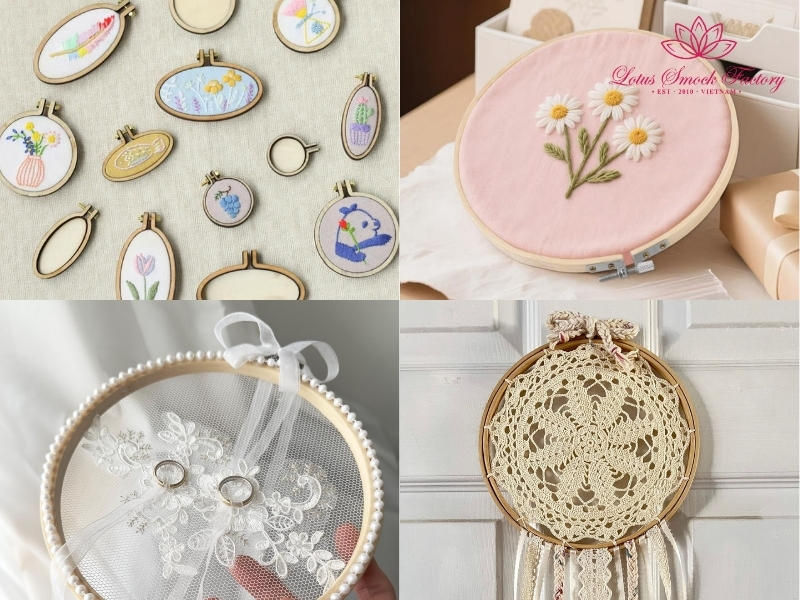
Finished smocked or embroidered fabric can be stretched inside a wooden hoop and hung directly on the wall. The hoop works as both a stitching tool and a display frame, so no extra framing is needed.
6.2. Wedding and baby shower décor
Embroidery hoops are often used for DIY event decorations. People connect different hoop sizes with ribbon, flowers, or fabric to create backdrops, garlands, and hanging decorations for weddings and baby showers.
6.3. DIY wall art and photo display
Fabric can be stretched inside a hoop to make simple wall art or photo displays. Mixing different hoop sizes together creates an easy gallery wall without using heavy frames.
6.4. Christmas ornaments and wreaths
Small hoops are great for handmade Christmas ornaments. They can be painted, wrapped with ribbon, or decorated with embroidery and greenery. Larger hoops are often used as wreath bases.
6.5. Classroom and kids’ craft activities
Embroidery hoops are easy for children to use because the fabric stays secure inside the frame. Schools and craft classes often buy hoops in bulk for sewing and embroidery activities.
6.6. Dream catchers and macramé bases
The round shape of embroidery hoops makes them perfect for dream catchers and macramé wall hangings. Artists can wrap the hoop with yarn or cord and use it as a strong base for designs.
6.7. Gift packaging and presentation
A small embroidery or smocked piece displayed inside a hoop can become a beautiful handmade gift. Many small craft businesses use this style to make products look more premium and ready for sale.
6.8. Fabric-wrapped gift card holders
Small hoops with decorative fabric can also hold gift cards. This creates a reusable and eco-friendly alternative to paper gift packaging.
7. What to Look for When Buying Bulk Wooden Embroidery Hoops
Use this checklist before placing any bulk wooden embroidery hoop order. The difference between a reliable supplier and a frustrating one often comes down to these specific details:
| What to Check | What to Look For | Red Flag | |
| 1 | Surface finish | Smooth surface with no rough spots or splinters | Rough wood or visible cracks |
| 2 | Edge rounding | Rounded edges that will not damage thread | Sharp edges |
| 3 | Brass screw quality | Screw should turn smoothly and tightens well | Screw gets stuck or feels loose |
| 4 | Ring fit | Outer ring fits tightly over inner ring | Large gaps between the rings |
| 5 | Wood species confirmation | Supplier clearly says beechwood, basswood, or bamboo | Supplier only says “hardwood” without details |
| 6 | Size consistency | Measure 5 hoops from a sample order: diameter variation should be under 1mm | More than 2mm variation across a 10-piece sample |
| 7 | MOQ and pricing | Clear minimum order and price for each quantity | No clear bulk pricing |
| 8 | Packaging for bulk transit | Hoops packed carefully to protect screws during shipping | Loose packing that can damage the hoops |
8. How to Care for and Store Bulk Wooden Embroidery Hoops
Proper storage protects your investment. It is particularly important when storing large quantities.
8.1. Protect from humidity
Wood can absorb moisture from the air. Too much humidity may cause hoops to bend, create gaps between the rings, or make the brass screws harder to turn.
Store hoops in a dry indoor place and avoid damp areas like basements or garages. Adding silica gel packets to storage boxes can help keep moisture away.
8.2. Staining and painting bulk hoops
Wooden hoops can easily be painted or stained, especially beechwood and basswood. Before painting:
- Lightly sand the surface first
- Remove the screw before painting or staining
- Let the wood dry completely before putting the hoop back together
Wet wood can expand slightly, and tightening the screw too early may crack the hoop.
8.3. Brass screw maintenance
If the screws become stiff, rub a little beeswax or graphite from a pencil onto the screw thread. This helps the screw turn smoothly without staining fabric. Avoid using oil because it can transfer onto fabric.
From our craft production team: One common mistake is storing hoops tightly closed for a long time. This puts pressure on the wood and can change the hoop’s shape over time. It is better to loosen the screw and store the outer ring relaxed. This helps the hoops keep their shape and last longer.
9. Frequently Asked Questions About Bulk Wooden Embroidery Hoops
Here are some questions that first-time buyers want to know before making bulk wooden embroidery hoop order
Q1: What size wooden hoop is best for beginners?
5–6 inch hoops are the most practical starting size. They provide enough working space for simple motifs and beginner smocking samples without being unwieldy.
Q2: Is beechwood or bamboo better for smocking?
Beechwood, without qualification. Bamboo hoops develop gaps over time and lose tension mid-project.
Q3: Where can I buy bulk embroidery hoops at low cost?
For US buyers, ArtCove offers reliable pricing at 50+ piece quantities. For international bulk orders at 500+ pieces, Alibaba OEM factories offer the lowest per-unit cost but require thorough sample verification before committing.
Q4: Can wooden embroidery hoops be painted?
Yes, beechwood and basswood both accept acrylic paint, chalk paint, and wood stain cleanly.
Q5: What is the standard MOQ for wholesale wooden embroidery hoops?
MOQ varies by supplier. ArtCove and similar US craft wholesalers typically have no formal MOQ: tiered pricing starts from 10–12 pieces. Alibaba OEM factories typically require 500–1,000 pieces per size for custom specifications.
10. Lotus Smock: Your Trusted Partner in Hand Embroidered Clothing
Lotus Smock is a Vietnam-based manufacturer specializing in smocked and hand embroidered apparels. Inside Lotus Smock, bulk wooden embroidery hoops are indispensible parts. If you have the intention of investing in this niche, do not forget to contact us:
Lotus Contact Information:
Facebook: facebook.com/lotussmockfactory
WhatsApp: +84 83 333 3498
Youtube: youtube.com/@LotusSmockFactory