Top 12+ Vietnam Wholesale Clothing Suppliers for Boutiques, Resellers, and Startups
Is Vietnam a reliable place for sourcing wholesale clothing today? Vietnam wholesale clothing suppliers are factories and manufacturers that produce garments in bulk for boutiques, brands, and resellers worldwide. These suppliers offer factory-direct pricing, flexible order sizes, and strong craftsmanship across many clothing categories.
In this guide, you will see which suppliers are trusted, how they differ, and which ones fit your business model best.
1. Why Global Buyers Choose Wholesale Clothing Suppliers in Vietnam
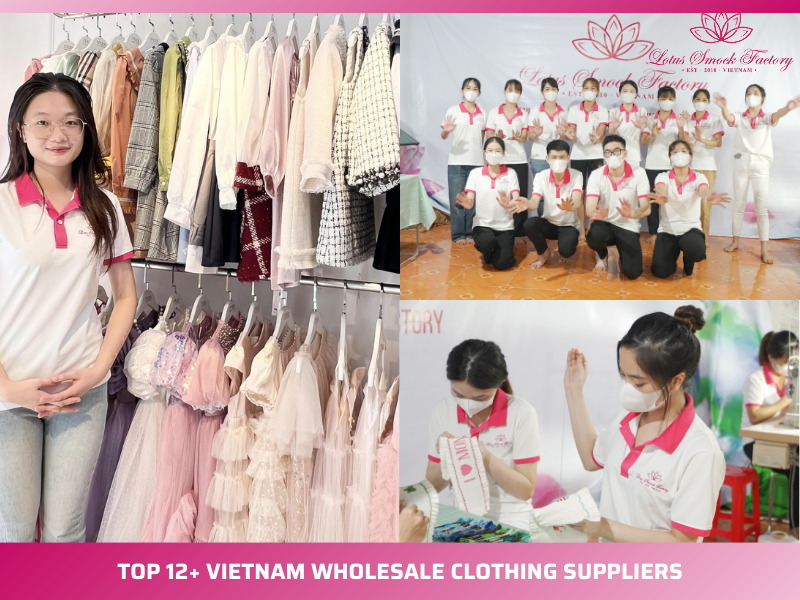
Global buyers continue to choose Vietnam wholesale clothing suppliers because the country offers a balance of cost, skill, and reliability that fits boutique and brand sourcing needs.
Labor costs in Vietnam remain lower than in China for garment production, especially for detailed work. You get competitive pricing without moving into ultra-low-cost factories that cut corners. This matters when you sell clothing that customers touch, wear, and photograph.
Vietnam also stands out for craftsmanship. Many factories specialize in:
- Embroidery and smocking
- Hand-guided stitching
- Small-batch detailed garments
If your products rely on detail rather than speed alone, Vietnam fits better than mass-production hubs.
Flexible MOQs are another reason buyers shift to wholesale clothing in Vietnam. Many suppliers like Lotus Smock, accept 30–100 pieces per style. This suits boutiques, test launches, and seasonal drops. You avoid overstock and reduce cash pressure.
Export infrastructure supports global shipping. Vietnam has major ports, stable freight routes, and long experience shipping to the US, EU, and Australia. Lead times stay predictable when you work with export-ready factories.
Moreover, compliance has also improved. Many suppliers now follow social standards, factory audits, and export documentation processes. Communication improves year by year.
For buyers who want control, consistency, and scale without extreme volume, Vietnam remains a practical sourcing choice.
2. Where Buyers Actually Source Wholesale Clothing in Vietnam
Buyers can source wholesale clothing in Vietnam through several common channels. Each channel fits a different stage of business growth and risk tolerance. You should understand how each option works before contacting suppliers.
- Factory-direct manufacturers
Factory-direct sourcing remains the preferred option for boutiques and brands that want control over design, quality, and reorders. Buyers work directly with the production facility, which allows clearer communication and stable long-term planning. Vietnam has many factory-direct suppliers that specialize in specific product categories rather than “everything for everyone.”
Examples include boutique-focused factories such as Lotus Smock and apparel manufacturers like HEM Apparel.
| Pros | Cons |
|
|
- Trading companies
Trading companies act as intermediaries between buyers and multiple factories. They often manage communication, sourcing, and logistics, which can feel easier for new buyers. However, production may move between factories without notice, which affects consistency and reorders.
| Pros | Cons |
|
|
- Wholesale marketplaces (Alibaba, Global Sources)
Online marketplaces help buyers discover suppliers quickly and compare pricing across many listings. These platforms combine factories, trading companies, and resellers, which makes verification difficult. Many buyers use marketplaces for research but move off-platform for serious production.
| Pros | Cons |
|
|
- Local sourcing agents
Sourcing agents support buyers who lack experience in Vietnam. Agents help find suppliers, manage samples, and handle communication. Results depend heavily on the agent’s network and technical knowledge.
| Pros | Cons |
|
|
- Direct referrals and factory websites
Many experienced buyers rely on referrals, industry contacts, or factory websites. This approach takes more time but offers the highest trust and stability. Buyers often form long-term partnerships through this channel.
| Pros | Cons |
|
|
So, why do many boutiques choose Factory-Direct?
For boutiques and small to mid-size brands, factory-direct sourcing offers the best balance between control and scalability. Suppliers like Lotus Smock operate as factory-direct manufacturers with boutique-friendly MOQs, clear production timelines, and repeatable designs. This model reduces risk while supporting long-term growth.
3. Top 12+ Vietnam Wholesale Clothing Suppliers
Vietnam has become a key sourcing destination for buyers seeking dependable manufacturing, skilled craftsmanship, and flexible order structures. Below is a curated list of Vietnam wholesale clothing suppliers that serve different business needs, from boutique-scale production to large-volume manufacturing.
3.1. Lotus Smock — Best Overall for Boutiques & Handmade Children’s Clothing
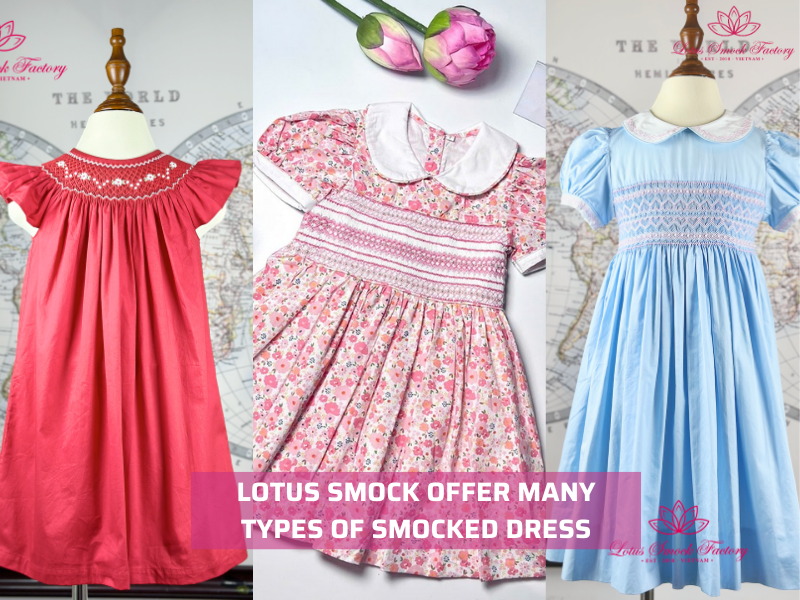
Lotus Smock focuses on handmade children’s clothing for boutiques that sell on detail, fit, and seasonal storytelling. The factory produces fully hand-smocked garments with tight control over embroidery, sizing, and fabric selection. Core products include smocked dresses, bishop styles, A-line dresses, bubbles, rompers, and coordinated sibling sets. Production centers on children’s wear rather than mixed apparel categories, which keeps quality consistent across collections.
For boutique buyers, Lotus Smock addresses several common sourcing challenges. The factory offers low minimum order quantities per style, making it easier to test new designs without overcommitting inventory. Each order follows a clear production timeline, typically 30–35 working days, which helps buyers plan seasonal drops and holiday launches. Design locking across size runs reduces variation between batches, allowing reliable reorders of best-selling styles.
Lotus Smock also supports preorder-driven buying. Buyers receive free 2D design mock-ups before production, which helps validate demand with customers before confirming quantities. This approach lowers inventory risk while supporting predictable growth.
Key solutions for boutiques:
- Low MOQ per style
- Free 2D mock-ups for preorder validation
- Reliable restocks of best sellers
- Stable quality for event and holiday collections
Lotus Smock fits boutiques, small to mid-size brands, and buyers who need craftsmanship without volume pressure.
Contact Lotus Smock to Start Your smocked outfits Order:
- Facebook: facebook.com/lotussmockfactory
- WhatsApp: +84 83 333 3498
- Youtube: youtube.com/@LotusSmockFactory
>>> Read more: Top 10+ Infant Smocked Clothing Picks for Newborn–24M
3.2. HEM Apparel
HEM Apparel serves brands that prioritize sustainability and responsible sourcing. The company focuses on private-label apparel production with an emphasis on ethical labor practices and environmentally conscious materials. Core products include women’s and unisex apparel, casual garments, and lifestyle collections designed for emerging brands.
HEM Apparel helps buyers who want transparency in sourcing and long-term brand positioning rather than rapid trend cycles. The factory supports startups and small brands that want to scale gradually while maintaining control over branding and materials. Communication tends to be structured, with clear development stages from sampling to production.
What buyers gain:
- Ethical manufacturing focus
- Private-label support for new brands
- Scalable production without fast-fashion pressure
This supplier suits sustainable fashion startups and mission-driven brands more than boutiques needing quick seasonal children’s collections.
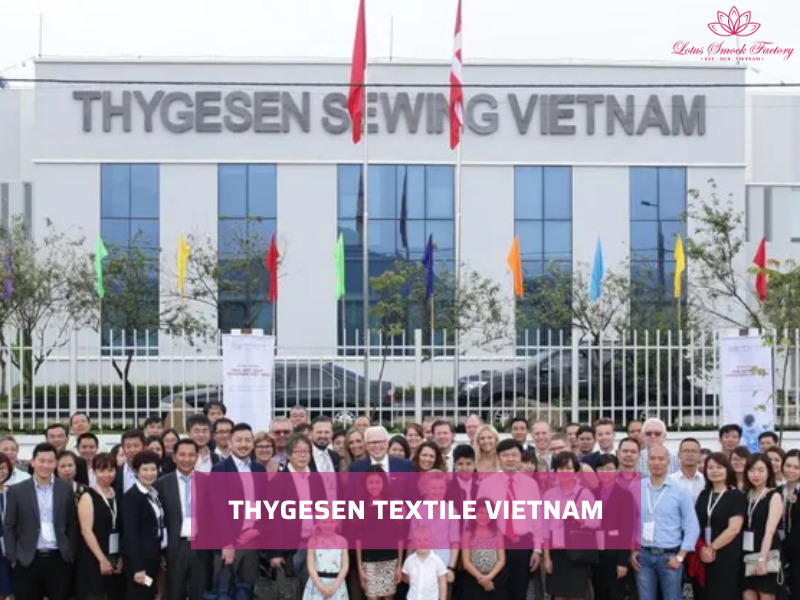
3.3. Thygesen Textile Vietnam
HEM Apparel is a Vietnam-based manufacturer that focuses on ethical private-label apparel production for brands that value transparency and long-term positioning. When you work with HEM Apparel, you are not buying trend-driven inventory. You are building branded apparel with clear sourcing and structured production steps.
The company mainly produces women’s and unisex clothing, including casual wear and lifestyle collections. Fabrics often align with sustainability goals, and labor practices follow responsible manufacturing standards. This model fits brands that want steady growth rather than fast turnover.
From a buyer’s view, HEM Apparel works best when you already have a brand direction. Communication follows a clear process from sampling to bulk production. Development timelines are predictable, but not fast. This setup suits brands that plan collections in advance and want control over labels, materials, and messaging.
What you gain when sourcing from HEM Apparel:
- Ethical manufacturing with documented processes
- Private-label support for startups and small brands
- Scalable production without fast-fashion pressure
This supplier fits sustainable fashion brands more than children’s boutiques or sellers who rely on quick seasonal drops. If your goal is brand building rather than rapid sell-through, HEM Apparel is a solid option.
3.4. Thanh Cong Textile Garment (TCM)
Thanh Cong Textile Garment (TCM) is a large Vietnam manufacturer known for vertical integration. The company controls fabric production, dyeing, cutting, and sewing within one system. This setup suits buyers who want fewer handoffs across the supply chain.
TCM mainly produces woven and knit apparel for export markets. Orders often support long-term programs rather than short runs. If you manage high volumes and fixed timelines, this structure reduces coordination work and limits sourcing gaps. Compliance systems are well developed, which helps brands that sell into regulated markets.
From a boutique view, flexibility is limited. MOQs tend to be higher, and design changes move slowly once production begins. TCM works best when styles repeat over multiple seasons and forecasts stay stable.
Buyer advantages include:
- Fabric-to-garment production in one operation
- Established compliance and audit systems
- Fewer external suppliers to manage
TCM fits established brands with scale, not sellers who rely on small batches or fast seasonal updates.
3.5. TNG Investment & Trading
TNG Investment & Trading operates as a large-scale garment manufacturer serving export markets. The company produces uniforms, casualwear, and mass-market apparel across standardized production lines. This structure supports buyers who focus on volume consistency rather than product detail.
If you manage large purchase orders and fixed designs, TNG offers stable output and clear pricing. The factory system works well for repeat styles and long-term supply contracts. Export processes are established, which helps brands shipping to multiple markets.
At the same time, flexibility is limited. MOQs are higher, and design changes slow once production starts. Buyers who rely on testing styles or short seasonal runs may face challenges.
Best use cases include:
- Large-volume apparel programs
- Export-driven brands with fixed collections
- Cost-focused sourcing models
TNG suits scale-first buyers, not boutiques or brands that depend on low MOQs or handcrafted detail.
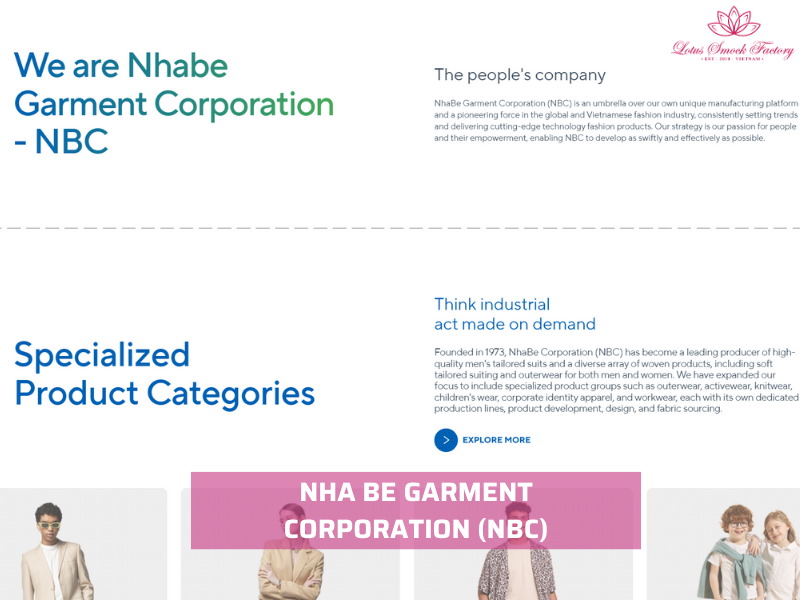
3.6. Nha Be Garment Corporation (NBC)
Nha Be Garment Corporation is a long-established garment manufacturer in Vietnam with a strong focus on standard apparel production. The company supplies uniforms and ready-made garments to both domestic and export markets. Operations follow structured, process-driven systems built for consistency over time.
If you value reliability, NBC offers predictable production and steady delivery schedules. The factory suits buyers with repeat programs and fixed specifications. Long production history also means export procedures and quality routines are well defined.
However, the setup limits flexibility. Custom design work, small batches, and frequent changes are not the core strength. MOQs tend to be higher, and development cycles move at a steady pace.
NBC works best for:
- Buyers with recurring orders
- Standardized product lines
- Long-term supply planning
Boutiques and trend-driven brands may find NBC less suitable for seasonal or test-based collections.
3.7. K-Embroidery Vietnam
K-Embroidery Vietnam focuses on decorative embroidery services rather than full garment manufacturing. The company works with buyers who already have base garments and need embroidery added as a design feature. Common applications include children’s wear, boutique apparel, and themed collections that rely on stitched details for visual appeal.
If you manage garment production elsewhere, K-Embroidery can support embellishment stages with controlled embroidery output. The supplier handles motif execution, thread selection, and placement based on buyer specifications. MOQs sit at a mid-range, which suits brands that run small to medium programs.
However, K-Embroidery does not manage full production workflows. You still need to coordinate fabric sourcing, garment construction, and final assembly with other factories.
K-Embroidery works best for:
- Brands with in-house or partner garment factories
- Buyers focused on decorative detailing
- Projects where embroidery is added after garment construction
Best for buyers who already manage garment production elsewhere.
3.8. Dony Garment
Dony Garment focuses on uniforms and corporate apparel rather than fashion collections. The company produces polo shirts, T-shirts, workwear, and branded basics for businesses, schools, and organizations. Production systems are built for speed and consistency, which helps buyers who need large quantities of standardized items on a tight schedule.
If you source apparel for staff uniforms or promotional use, Dony Garment offers a practical solution. Designs follow clear templates, and materials suit daily wear and repeated washing. Turnaround times are often faster than fashion-focused factories because styles do not change frequently.
However, this structure limits flexibility. Custom silhouettes, decorative details, or small test runs are not a strong fit.
Dony Garment works best for:
- Corporate uniform programs
- Promotional apparel orders
- Buyers who value speed over design variety
Boutiques and fashion-forward brands will likely find the product range too basic.
3.9. May 10 Garment Corporation
May 10 Garment Corporation serves established brands that operate in international markets. The factory produces woven and knit garments for export, with systems designed around volume control, compliance, and delivery consistency. Production follows strict timelines and documented workflows, which support long-term sourcing programs.
If you manage stable forecasts and repeat styles, May 10 offers reliable output and experience with global shipping standards. The company understands export documentation and quality audits, which reduces operational friction for large buyers.
MOQs remain high, and production lines prioritize scale over experimentation. Design changes mid-cycle are limited, and sampling timelines follow formal procedures.
May 10 is best suited for:
- Export-focused apparel brands
- Long-term, high-volume programs
- Buyers with fixed seasonal planning
Small boutiques and test-driven brands may find entry barriers too high.
3.10. Viettien Garment
Viettien Garment focuses on large-scale apparel production for domestic and export markets. The company operates with strong industrial capacity and covers a wide range of standard clothing categories, including shirts, trousers, uniforms, and casualwear. Production systems prioritize volume efficiency, cost control, and consistent output across large orders.
Viettien works well for buyers who manage mass-market programs with stable designs and long production runs. The factory handles high quantities with predictable delivery schedules, which suits brands that sell through national or regional retail networks. Quality follows defined standards, but customization options remain limited.
This supplier is not structured for small batches or frequent style changes. MOQs are high, and development cycles focus on proven patterns rather than experimental designs.
Viettien is best for:
- Large apparel brands
- High-volume sourcing strategies
- Buyers with fixed product lines
Boutiques and niche brands may find the scale and rigidity unsuitable.
3.11. Phong Phu Corporation
Phong Phu Corporation operates primarily as a textile producer rather than a finished garment manufacturer. The company specializes in yarn, fabric development, and large-scale textile processing for apparel supply chains. This makes Phong Phu a strong option for buyers who want control over fabric quality and material sourcing.
Buyers often work with Phong Phu to secure consistent fabrics, then coordinate garment assembly through separate factories. This model suits experienced sourcing teams that manage multiple production stages. Fabric standards remain stable, and capacity supports long-term supply agreements.
However, buyers must plan coordination carefully. Finished garment services are limited, and timelines depend on how well partners align.
Phong Phu works best for:
- Fabric-driven sourcing strategies
- Buyers with strong production oversight
- Brands managing multi-factory workflows
>>> Read more: Top 10+ Best Children’s Clothing Brands Superstores Industry
4. Common Problems Buyers Face When Sourcing in Vietnam
Many buyers turn to Vietnam wholesale clothing suppliers with high expectations. In practice, problems often appear when supplier selection lacks structure. You can avoid most risks by understanding common issues and using a clear evaluation checklist before placing orders.
Common problems buyers face
- Inconsistent quality: Factories switch materials or stitching methods between runs. Samples look fine, bulk goods differ.
- Design changes without notice: Patterns, trims, or measurements shift after sampling, especially with trading companies.
- No reorder guarantee: Some suppliers treat each order as a one-off and cannot repeat best sellers.
- Communication delays: Time zone gaps and unclear contacts slow revisions and approvals.
- Timeline slippage in peak seasons: Lunar New Year and holiday rushes push delivery dates back.
These issues usually happen when buyers work with suppliers who lack specialization, clear workflows, or export experience.
Checklist to evaluate a Vietnam wholesale clothing supplier
Use the checklist below before contacting or committing to any supplier:
- Product specialization: Does the factory focus on specific categories, or claim to produce everything?
- MOQ clarity: Are minimums clear per style and size range?
- Sampling & mock-ups: Can the supplier provide samples or design mock-ups before production?
- Reorder capability: Can the factory repeat the same design months later?
- Quality control steps: Are inspections defined during cutting, sewing, and finishing?
- Export experience: Does the supplier handle packing, documents, and international shipping smoothly?
Note: You should use this checklist before contacting any supplier to reduce risk and protect your inventory planning.
>>> Boutique should check more: Top 10 Wholesale Clothing Quality Standards Every Boutique Owner Must Know [2026 Update]
5. Why Many Boutiques Start with Lotus Smock
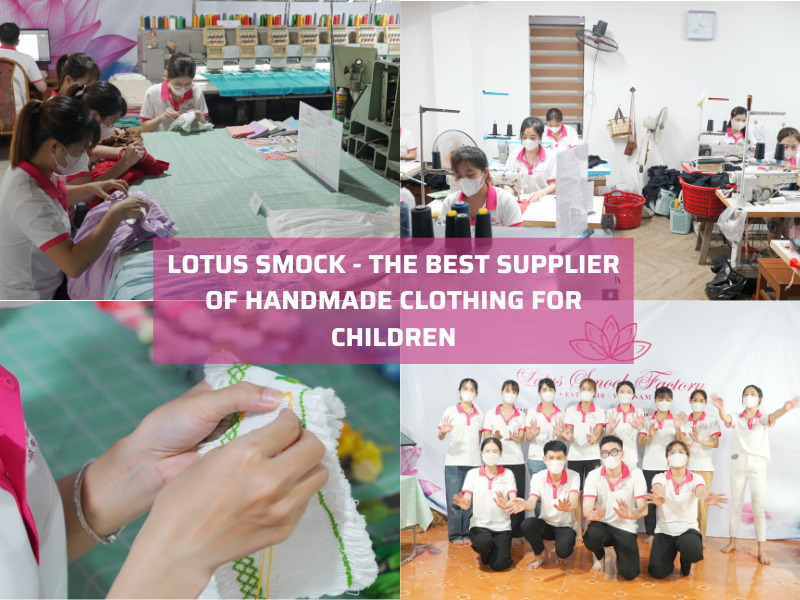
Many boutiques choose Lotus Smock as a starting point because the production model lowers risk while keeping product quality high. Every garment is fully hand-crafted, from smocking to embroidery. Skilled artisans complete each piece by hand, not by machine. This approach gives boutiques consistent results across size runs and seasons.
Lotus Smock also supports personalized production by location and customer profile. Boutiques can adjust colors, motifs, sleeve lengths, or embroidery themes to suit local demand. This flexibility helps stores offer varied collections instead of repeating the same designs. As a result, boutiques can serve multiple customer segments and increase average order value without holding excess stock.
Key reasons boutiques begin with Lotus Smock include:
- Low entry risk through small MOQs per style
- Clear production steps from design to shipment
- Handcrafted quality that supports premium pricing
- Custom details that fit regional tastes and events
As boutiques grow, the workflow stays stable. Designs remain repeatable, and scaling happens through additional styles rather than larger single orders. This structure allows steady growth without sacrificing craftsmanship or planning control.
Contact Lotus Smock to Start Your smocked outfits Order:
- Facebook: facebook.com/lotussmockfactory
- WhatsApp: +84 83 333 3498
- Youtube: youtube.com/@LotusSmockFactory
6. FAQs
Q1. Which types of clothing does Lotus Smock offer?
Lotus Smock focuses on handcrafted children’s clothing for boutiques. The core range includes hand-smocked dresses, bishop and A-line styles, bubble rompers, shortalls, jon jons, and coordinated sibling sets. The factory also produces seasonal and event-based designs for holidays, birthdays, and themed collections. All items use hand smocking and manual embroidery rather than printed or mass-produced decoration.
Q2. Is Lotus Smock suitable only for smocked clothing?
Lotus Smock specializes in smocked and embroidered children’s garments. This focus allows better quality control, consistent sizing, and reliable reorders. Buyers looking for mass-market basics or adult apparel may need a different supplier.
Q3. Can small boutiques work with Vietnam wholesale clothing suppliers?
Yes. Many Vietnam wholesale clothing suppliers, including Lotus Smock, support small and mid-sized buyers. Boutique-friendly MOQs and flexible size mixes make it possible to start without large inventory risk.
Q4. How long does production usually take in Vietnam?
For made-to-order production, typical timelines range from 30 to 35 working days, depending on design complexity and order size. Shipping by express carriers usually takes 5–7 days.
Q5. Do Vietnam suppliers support custom designs?
Most factory-direct suppliers support customization. Lotus Smock offers custom colors, embroidery motifs, and design adjustments, along with free 2D mock-ups to review before production.
Q6. Are reorders possible for best-selling styles?
Reorders depend on supplier structure. Factory-direct partners like Lotus Smock maintain repeatable designs, which makes restocking easier and more predictable.
7. Final Words
Choosing the right Vietnam wholesale clothing suppliers depends on your product type, order size, and growth plan. Some factories serve large brands with high volumes, while others focus on boutique-level production and custom work. Vietnam works best when you partner with suppliers that match your scale and offer consistent reorders, clear timelines, and stable quality.