Top 5+ Newborn Smocked Romper Sourcing Tips for Boutiques
A newborn smocked romper is a one-piece outfit featuring hand-smocking that provides gentle stretch, comfort, and a polished look for newborns. Parents choose a smocked romper for photos, hospital outings, and early family events. The soft fit supports movement and easy diaper changes. If you are a boutique owner, keep reading to see why this piece sells well, which styles parents buy most, and how boutiques source it with confidence.
1. What is a Newborn Smocked Romper?
A newborn smocked romper is a one-piece outfit designed for newborns and young babies, featuring hand-smocking across the chest for added stretch and shape. The smocking pattern is a piece of fabric gathered together into pleats by hand or by machine.
Parents often choose this style because the design balances comfort and charming look. The romper snaps open for diaper changes and keeps fabric smooth around the baby’s body.
You may see similar newborn smocked outfits, but they are not the same:
- Newborn smocked romper: straight or gently gathered legs, snaps, and a clean silhouette
- Newborn smocked bubble: fuller leg shape with elastic openings, more volume at the seat
- Smocked layette / coming-home romper: lighter weight, often longer, designed for the first days home
The typical size range runs from NB to 24M, with the strongest demand from NB to 12M. Parents often buy these pieces for specific moments:
- Hospital coming-home outfits
- Newborn photo sessions
- Baby shower gifts
- Holidays and church events
Newborn smocked rompers sell consistently because newborn clothing is an emotional purchase as it is a mark for a milestone moment. A smocked romper feels special without feeling stiff.
Parents value some clear features of smocked rompers:
- Soft structure from smocking that stretches with movement
- Snap access that speeds up diaper changes
- A photo-ready shape that does not look like sleepwear
Rompers outperform dresses for newborns because babies lie down, curl, and get held often. A one-piece outfit stays in place and looks tidy from every angle.
For boutiques, newborn smocked rompers bring highly consistent demand across the year, not just on special occasions.
2. Best-Selling Newborn Smocked Romper Styles
To optimize profit margins, boutiques should know which styles are best-selling. Below are some styles that consistently perform well, based on how parents shop, how newborns wear clothing, and when demand peaks.
2.1. Smocked Bubble Romper
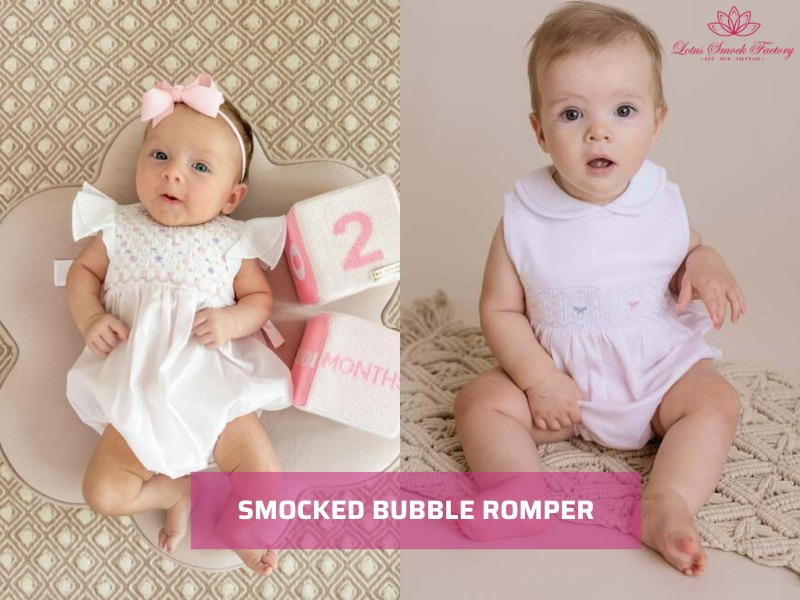
A smocked bubble romper features a one-piece design with a smocked chest and gently gathered legs. The bubble shape creates extra room at the seat, which works well for diapers and frequent movement.
Parents choose bubble rompers because they look soft and playful while staying comfortable for babies who curl, stretch, and get held often.
2.2. Classic Smocked Newborn Romper
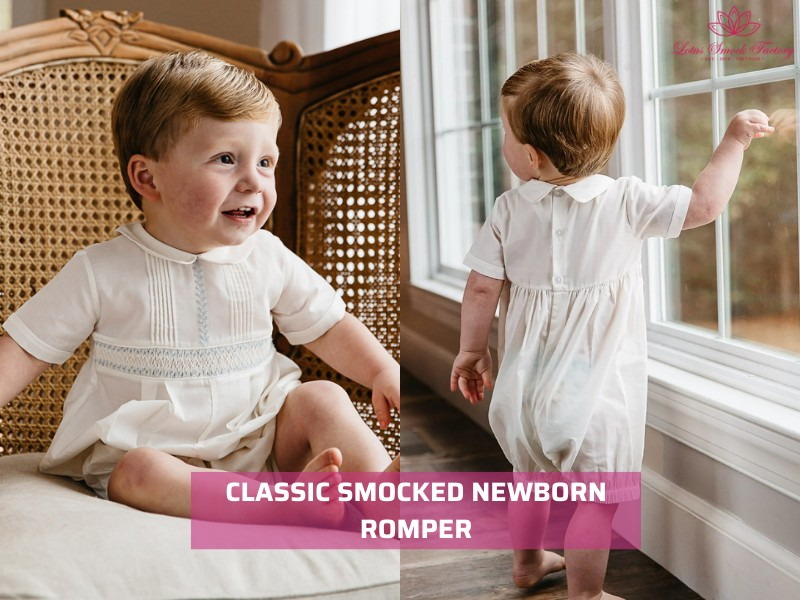
The classic smocked newborn romper has a straighter leg and a more traditional silhouette compared to a bubble. It still includes chest smocking but offers a cleaner, more tailored look. This style is suitable for parents who prefer a timeless feel or want something less playful than a bubble.
Parents choose classic rompers because:
- The shape looks neat in photos
- The style feels appropriate for church or formal visits
- The design pairs well with subtle embroidery
Insight for boutiques: These rompers sell well year-round, but peak during baby shower season (typically in the spring and summer) and early holidays when gift buyers look for something safe and elegant.
2.3. Smocked Coming-Home Rompers
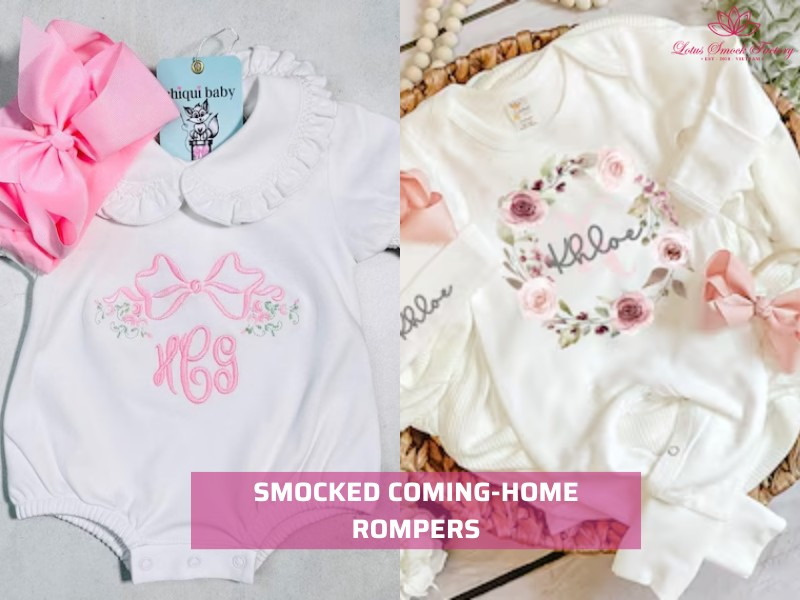
Smocked coming-home rompers are designed specifically for a baby’s first days outside the hospital. They often use softer fabrics, lighter construction, and snap placements that support easy dressing.
These rompers sell strongest when they are personalized with names or meaningful patterns like characters or letters. Core sizes are NB and 0-3M. Parents usually buy these early, often before birth. They choose coming-home rompers because:
- The outfit feels special for the first photos
- Smocking adds stretch without stiffness
- The design feels intentional, not like sleepwear
2.4. Smocked Longall / Shortall (Boys)
Smocked longalls and shortalls are widely loved by parents of young boys. They feature smocking at the chest with either long or short legs, depending on the season. For boutiques, boys’ smocked options help balance assortments that otherwise skew heavily toward girls.
Best sizes run from 3M to 18M, with seasonal shifts:
- Shortalls sell best in spring and summer
- Longalls sell best in the fall and winter
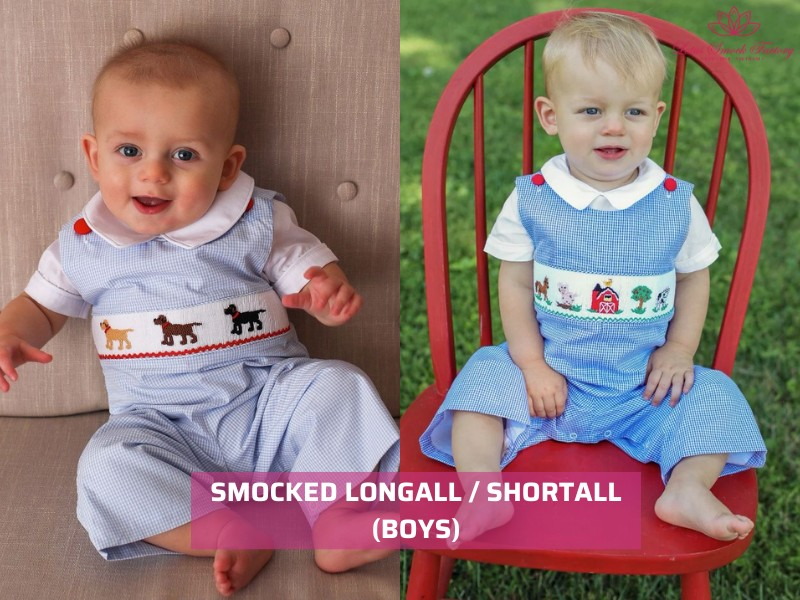
Discover other widely preferred boy’s smocked clothing collection for your little ones
2.5. Holiday-Themed Smocked Rompers
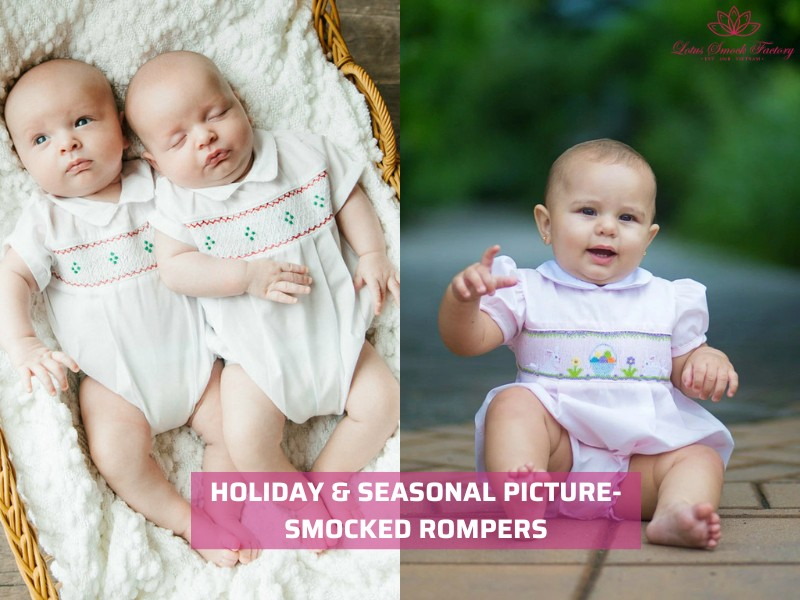
Holiday and seasonal picture-smocked rompers are among the strongest performers in newborn categories. Common themes include:
- Easter: bunnies, crosses, pastels
- Halloween: pumpkins, harvest motifs
- Christmas: classic icons, neutral holiday colors
Explore our newest smocked clothing holiday collection in 2026 to elevate your boutique collection
These rompers sell in short windows but convert fast. Parents rarely hesitate when the design matches the season and the baby’s age. Therefore, holiday and seasonal picture-smocked rompers are one of the best-selling products.
2.6. Matching Sibling Sets (Newborn + Older Kids)
Matching sibling sets remain one of the strongest revenue drivers for boutiques. In many cases, the newborn smocked romper is the anchor purchase, and parents add coordinating outfits for older children.
2.7. The summary for popular smocked styles:
| Style | Best-selling Sizes | Best For |
| Smocked Bubble Romper | NB, 3M – 12M |
|
| Classic Smocked Newborn Romper | NB – 12M |
|
| Smocked Coming-home Romper | NB, 0-3M |
|
| Smocked Longalls/Shortalls | 3M – 18M |
|
| Holiday-Themed Smocked Romper | All age |
|
| Matching Sibling Sets | NB – 6Y |
|
3. What Makes a High-Quality Newborn Smocked Romper
Choosing a newborn smocked romper goes beyond appearance. Parents and boutiques look for pieces that feel gentle, fit well, and hold shape after repeated wear and washing. Quality shows in fabric choice, smocking work, and construction details.
3.1. Fabrics
Fabric directly decides comfort, breathability, and long-term use.
- Cotton poplin
Cotton poplin remains the most reliable option. The fabric feels smooth and gentle on newborn skin and supports hand smocking without pulling. It works well for year-round wear and photographs nicely. - Cotton Poly blends (typically 65% cotton 35% polyester)
This is a great alternative and more cost saving for 100% cotton, suiting warm climates and indoor settings. The lighter weight keeps babies comfortable during long holding periods and events. - Linen: A beautiful, breathable natural fiber perfect for warm weather. Choose a lightweight or handkerchief linen so the smocking isn’t too bulky on a newborn’s chest
- Gingham or Seersucker: Excellent, breezy choices for textured, classic spring/summer rompers and dresses.
In some cases, heavy fabric makes sense. Heavier cotton or soft corduroy fits fall and winter use. However, these fabrics need careful construction to avoid stiffness around the chest and legs.
3.2. Smocking & Embroidery Quality
Smocking quality separates premium rompers from mass-made pieces.
- Hand smocking vs machine work
Hand smocking creates natural stretch and softer gathers. Machine work often looks flat and restricts movement. - Even rows and stitch tension
Consistent spacing and balanced tension prevent puckering and uneven wear. - Backing stability
A stable backing supports the smocking and helps the garment keep shape over time.
3.3. Fit & Comfort for Newborns
Fit matters more than size labels.
- Chest flexibility allows breathing and movement
- Neckline and leg openings should sit flat without pressure
- Snap placement must support quick diaper changes without pulling fabric
3.4. Durability After Washing
Newborn clothes need frequent washing.
- Shape retention keeps the romper photo-ready
- Smocking holds prevent stretching out
- Fabric wear should stay smooth after multiple cycles
A well-made smocked romper balances softness, structure, and durability, which explains why parents return to trusted styles again and again.
4. Common Sourcing Problems Boutiques Face For First Orders
First time wholesale buyers may face some common challenges which can negatively affect profit margins or the business reputation. These consequences trigger many issues for the long-term development of boutiques or retailers.
Navigating these early-stage production hurdles requires awareness and proactive management. Here are the most common sourcing problems and how to handle them:
4.1. MOQs
The problem: first-time investing boutiques or startups may need to over-invest in stock as many suppliers require high minimum order quantities (+500 units per style), especially traditional factories or mass-producing factories.
The fix: Researching before making orders and sourcing through specialized factories or wholesalers that offer low MOQs.
4.2. Quality Discrepancies in Smocking and Fabric
The problem: The first sample may look good, but the bulk production arrives with loose smocking threads, crooked geometric patterns, or subpar fabrics that shrink or pill.
The fix: Requesting both a pre-production sample and a top-of-production sample.
4.3. Sizing and Fit Inconsistencies
The problem: Sizing charts can wildly vary from standard US/UK/EU sizes as smocked pleating may cause different elastication.
The fix: Working only with suppliers who provide certified sizing charts and have proven experience producing children’s apparel.
4.4. Delay Time and International Shipping
The problem: First-time orders can face unexpected delays at port, communication barriers due to time zones, and expensive freight costs, potentially ruining your seasonal launch dates.
The fix: Build a minimum 30-45 day buffer into your seasonal timeline, which means you may need to contact the wholesale supplier 2-3 months before selling time.
5. Lotus Smock Review: A Wholesale Solution for Newborn Smocked Rompers
For boutiques that want stable quality and predictable supply, Lotus Smock offers a clear wholesale path for newborn smocked rompers. This approach fits newborn collections, where sizing, softness, and timing matter every season.
5.1. Production & Craftsmanship
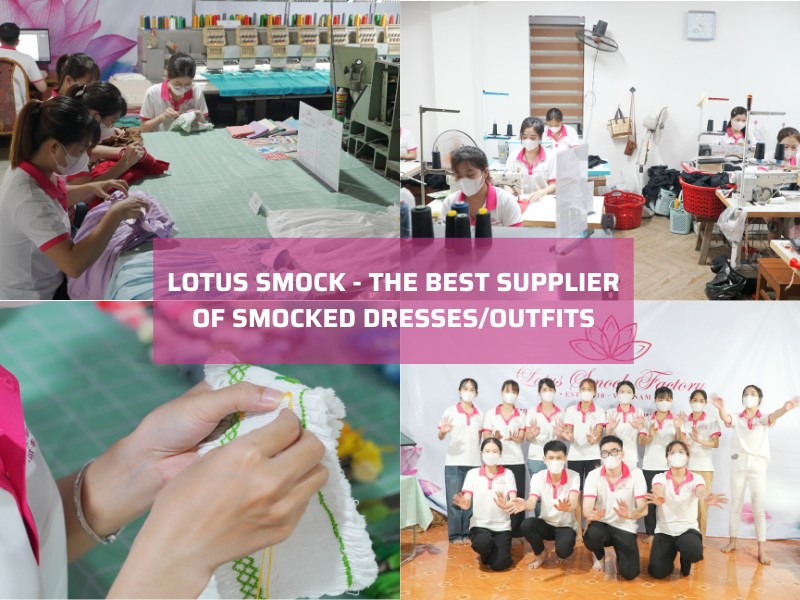
Lotus Smock operates a Vietnam-based factory with a strong focus on traditional handwork.
- Each smocked product is fully hand-smocked by skilled artisans
- Artisans work by hand, not machines, which gives better control over stitch tension and pattern clarity
- Manual embroidery allows fine details on small garments without stiff or bulky finishes
This process supports soft structure, which is critical for newborn comfort and photo use.
5.2. Product Capabilities
Lotus Smock supports a wide range of newborn-focused styles, not just one core item.
- Smocked bubbles and classic newborn rompers
- Seasonal styles for Easter, Christmas, and fall collections
- Custom fabric choices and color palettes
- Picture smocking and matching sibling sets to increase order value
Boutiques can keep a cohesive look across newborn and older sizes.
5.3. Wholesale Terms for Boutiques
The wholesale model is built to reduce risk and support planning.
- MOQ: 30 pcs per style
- Production time: 30-35 working days
- Shipping: Delivery in 5-7 working days
- Free 2D mock-ups help test designs before production
These terms allow boutiques to validate demand before committing.
5.4. Why Boutiques Choose Lotus Smock
Boutiques choose Lotus Smock for practical reasons:
- Reliable reorders when a style sells well
- Consistent quality across batches
- Lower inventory risk for newborn sizes
- Better control when planning full newborn collections
This structure helps boutiques grow smocked apparels sales with confidence, season after season.
Contact Lotus Smock to Start Your smocked outfits Order:
- Facebook: facebook.com/lotussmockfactory
- WhatsApp: +84 83 333 3498
- Youtube: youtube.com/@LotusSmockFactory
6. Frequently Asked Question About Newborn Smocked Rompers?
Here are some questions that asked most about these products:
Q1. What size sells fastest for newborn smocked rompers?
For most boutiques, NB, 3M, and 6M sell the fastest. Parents often buy these sizes for hospital coming-home outfits, newborn photos, and baby shower gifts. NB and 3M work well for first-time parents, while 6M attracts buyers who want a little room for growth.
Q2. Bubble vs classic romper: which performs better?
Both sell, but they serve different needs. Bubble rompers usually move faster because they are diaper-friendly and allow easy movement. Classic rompers appeal to parents who want a more traditional look for photos or church.
Q3. Hand-smocked vs machine-smocked: what should boutiques look for?
Hand-smocked pieces show even rows, balanced stitch tension, and soft flexibility across the chest. Machine work is faster and quality-consistent. For newborn smocked rompers, hand smocking usually delivers better comfort and a cleaner look in photos.
Q4. How early should boutiques place orders for holidays?
Boutiques should place holiday orders 8–10 weeks in advance. This window covers production, shipping, and buffer time, which is critical for newborn holiday outfits that sell in a short season.
7. Final Words
A newborn smocked romper meets parents’ needs for comfort, fit, and photo value in the first months. The smocked chest flexes as babies move and grow. The one-piece design simplifies dressing and care. Boutiques benefit from steady demand across seasons. Use the guidance above to choose the right styles, sizes, and sourcing plan.